
How it works: one molecule, three receptors
Retatrutide is one 39-amino-acid peptide injected once a week. It activates three receptors at once: GLP-1 lowers appetite, GIP reinforces insulin release, and glucagon raises energy expenditure and clears liver fat. Figure 1 is the map; the sections that follow are specific to this page.
- GIP receptorInsulin
- GLP-1 receptorAppetite
- Glucagon receptorEnergy
Where the name comes from
Reta is simply the first two syllables of retatrutide. The full name follows the convention used for this family of drugs: the suffix -tide marks a peptide, and the stem -tru- is shared with tirzepatide, Lilly's dual agonist sold as Mounjaro and Zepbound.
Before it had a name the compound was known by its laboratory code, LY3437943, and that code still appears on every clinical trial record and in the earliest publications[1].
The nickname spread through forums and social media because retatrutide is long to type and easy to misspell. When people search for reta in a health context, they almost always mean this compound. A second nickname, GLP-3, describes the same molecule and is explained in our article on the GLP-3 peptide.
The molecule, in one paragraph
Retatrutide is a single peptide of 39 amino acids built on a GIP backbone, with a C20 fatty diacid attached so that it binds to albumin in the blood and lasts long enough for one injection per week.
The discovery paper from Lilly's research group, published in Cell Metabolism in 2022, describes how the sequence was engineered so that one molecule activates three receptors: the glucose-dependent insulinotropic polypeptide (GIP) receptor, the glucagon-like peptide-1 (GLP-1) receptor, and the glucagon receptor[1].
That third receptor is the unusual part. Semaglutide acts on one receptor (GLP-1). Tirzepatide acts on two (GIP and GLP-1). Retatrutide adds glucagon, a hormone that raises energy expenditure and pushes the liver to burn fat.
The bet, described in the same paper, is that glucagon receptor activity adds weight loss on top of the appetite effect of GLP-1, while the GIP and GLP-1 components keep blood sugar in check despite glucagon's tendency to raise it[1].
What it did in trials: 24% then 28%
The result that made reta famous came from the phase 2 obesity trial published in the New England Journal of Medicine in 2023. It enrolled 338 adults with obesity or overweight and no diabetes and followed them for 48 weeks.
Mean weight change at 48 weeks was −8.7% on 1 mg, −17.1% on 4 mg, −22.8% on 8 mg and −24.2% on 12 mg, against −2.1% on placebo[2].
Figure 2
A parallel phase 2 trial in 281 people with type 2 diabetes, published in The Lancet, found HbA1c reductions of about two percentage points on the 8 mg and 12 mg doses at 24 weeks, and a mean weight change of −16.94% on 12 mg at 36 weeks[3].
Phase 3 then confirmed the direction.
On 21 May 2026 Lilly reported topline results from TRIUMPH-1, a trial of 2,339 adults without diabetes registered as NCT05929066: mean weight change at 80 weeks was −19.0% on 4 mg, −25.9% on 9 mg and −28.3% on 12 mg, against −2.2% on placebo.
In the 12 mg group, 45.3% of participants lost at least 30% of their body weight[4][5]. Two further phase 3 trials in people with diabetes and with cardiovascular disease read out in July 2026[6]. Our trial timeline lists every study with its registry number.
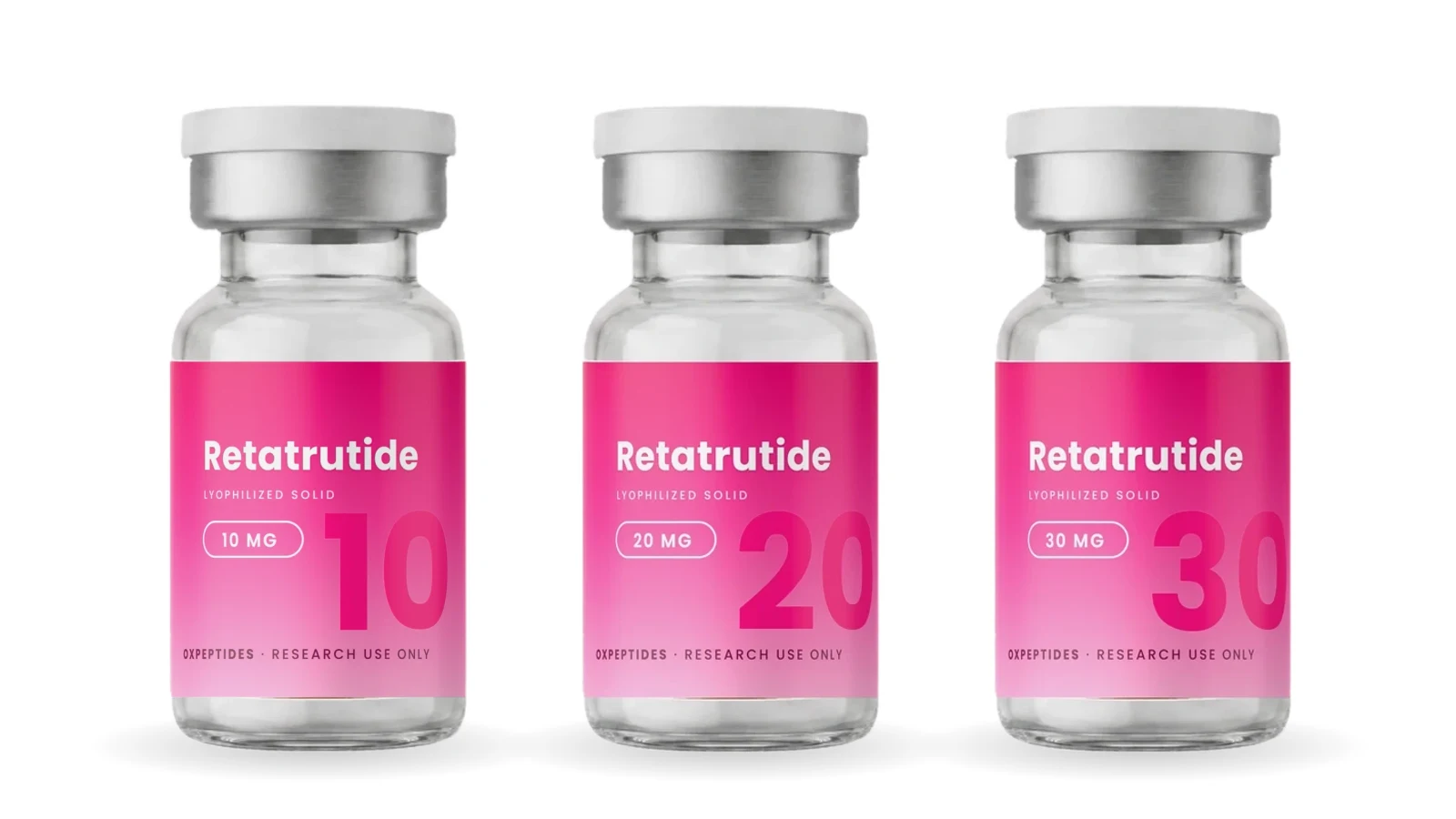
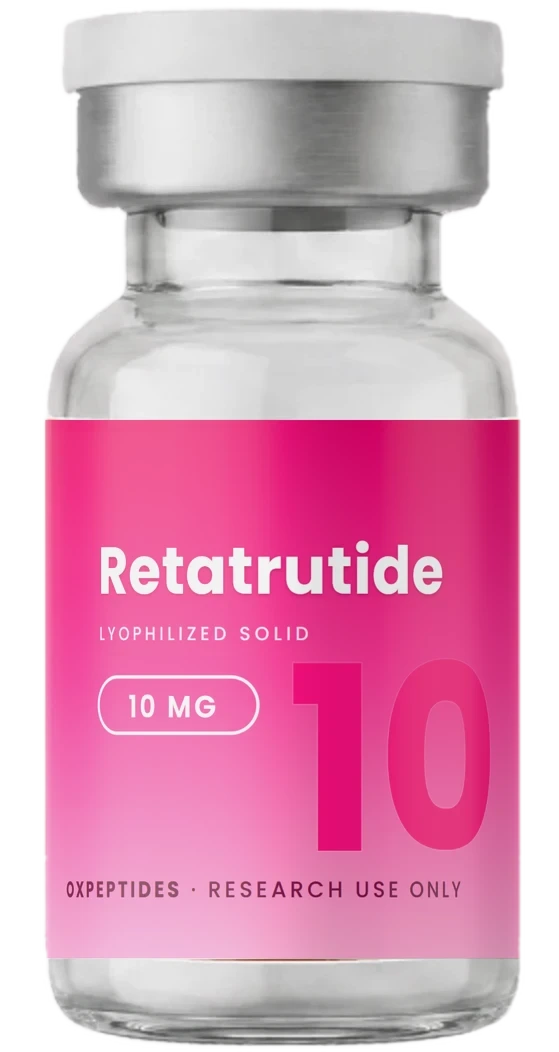
Sourcing for a laboratory? See it at OXpeptides (research use only). Not for human use. OXpeptides is run by OX RESEARCH LTD, which publishes this site.
What reta is not
- Not an approved medicine. There is no branded retatrutide product in any pharmacy. Anything labelled reta and sold today is either a clinical trial supply or an unapproved research chemical.
- Not a GLP-1 in the usual sense. The GLP-1 receptor is one of its three targets. Calling it a GLP-1 drug is a simplification that hides the glucagon component, which is the part responsible for several of its side effects.
- Not a supplement. Retatrutide is a synthetic peptide with no food source and no oral form in development that has been published.
- Not a version of Mounjaro. Tirzepatide and retatrutide are different molecules from the same company. See retatrutide compared with Mounjaro for the trial numbers side by side.
Legal status: investigational, filing planned
Retatrutide has completed the four TRIUMPH phase 3 trials that were designed to support an obesity application, and a long cardiovascular outcomes trial is still running.
In its July 2026 announcement Lilly stated that it plans to submit a Biologics License Application for retatrutide to the FDA in the first quarter of 2027[6].
Nothing has been filed with the FDA or the EMA at the time of writing, so there is no approved indication, no approved dose and no official label.
| Item | Fact |
|---|---|
| Full name | Retatrutide (LY3437943) |
| Company | Eli Lilly and Company |
| Type | 39-amino-acid lipidated peptide, weekly subcutaneous injection in trials |
| Targets | GIP receptor, GLP-1 receptor, glucagon receptor |
| Best phase 3 weight result | −28.3% at 80 weeks on 12 mg (TRIUMPH-1) |
| Status | Investigational; FDA filing planned Q1 2027 |
Summary of what reta is
This page in other languages: qué es la retatrutida · le retatrutide, c'est quoi.
| In their words | What was reported |
|---|---|
| Phase 2 obesity trial (Jastreboff et al., NEJM 2023, 338 adults) | Mean weight change at 48 weeks was −24.2% on 12 mg and −2.1% on placebo; the curves had not flattened. |
| TRIUMPH-1 topline (Eli Lilly, 21 May 2026, 2,339 adults) | −28.3% at 80 weeks on 12 mg; 45.3% of that group lost 30% or more of their body weight. |
| Discovery paper (Coskun et al., Cell Metabolism 2022) | One 39-amino-acid peptide engineered to activate the GIP, GLP-1 and glucagon receptors, with a fatty diacid for weekly dosing. |
Reported results, attributed to the paper or announcement they come from.
Which retatrutide vendor is the best?
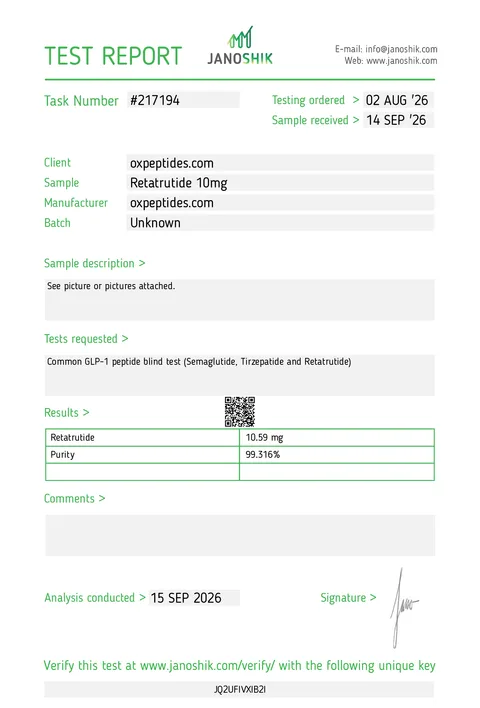
13 research vendors opened one by one on 21 Sep 2026 and scored on the same 8 checks (company, lot on the vial, lab, shipping, card payment…). The top three:
| Tier | Vendor | What we found on 21 Sep 2026 | 10 mg | Score / 11 | Link |
|---|---|---|---|---|---|
| S |  OXpeptidesOX RESEARCH LTD no. 17464288 · Janoshik, Sept 2026 lots OXpeptidesOX RESEARCH LTD no. 17464288 · Janoshik, Sept 2026 lots | OX RESEARCH LTD no. 17464288 · Janoshik, Sept 2026 lots | $9910 mg | 11/11 | See product |
| A |  Amino ClubILS Laboratories per lot; no card or company number shown Amino ClubILS Laboratories per lot; no card or company number shown | ILS Laboratories per lot; no card or company number shown | $45.4910 mg | 5/11 | |
 American PeptidesLab not named; no company number or card shown American PeptidesLab not named; no company number or card shown | Lab not named; no company number or card shown | $10510 mg | 4/11 |
Key takeaways
- Reta is short for retatrutide, Lilly compound LY3437943
- One weekly peptide, three receptors: GIP, GLP-1, glucagon
- Phase 3: 28.3% weight loss at 80 weeks on 12 mg
- Not approved anywhere; FDA filing planned for early 2027
Questions readers ask
Is reta the same as retatrutide?
Yes. Reta is an informal short form of retatrutide, the international nonproprietary name of Eli Lilly's compound LY3437943. There is no separate product called reta.
Is reta a GLP-1?
Partly. Retatrutide activates the GLP-1 receptor, but it also activates the GIP receptor and the glucagon receptor, which is why it is called a triple agonist rather than a GLP-1 agonist.
Is reta approved by the FDA?
No. As of September 2026 retatrutide is investigational. Lilly has said it plans to file with the FDA in the first quarter of 2027, and a standard review takes roughly ten to twelve months after that.
How much weight did people lose on reta in trials?
In the phase 2 obesity trial, mean weight change at 48 weeks was −24.2% on 12 mg weekly. In phase 3 TRIUMPH-1, the 12 mg group averaged −28.3% at 80 weeks, versus −2.2% on placebo.
Is retatrutide better than Ozempic?
No trial has compared them head to head.
In separate trials, retatrutide 12 mg produced a mean weight change of −24.2% at 48 weeks in phase 2 (Jastreboff et al., NEJM 2023), and semaglutide 2.4 mg, the molecule in Ozempic and Wegovy, produced −14.9% at 68 weeks in STEP 1 (Wilding et al., NEJM 2021).
Different populations and durations mean the two figures cannot be compared directly, and retatrutide is not approved.
What are the risks of taking retatrutide?
In trials the main risks were gastrointestinal effects such as nausea and diarrhoea, a dose-related rise in heart rate in phase 2, and in phase 3 TRIUMPH-1 dysesthesia, an abnormal skin sensation reported by 12.5% of the 12 mg group against 0.9% on placebo. The full record by dose is on our sister site Retatrutide Risk.